Did you know that 73% of political thriller readers become more skeptical of government institutions after diving into the genre?
That’s partly thanks to authors like Richard Condon, whose *Manchurian Candidate* tapped into fears of foreign interference long before it became a hot topic.
These stories aren’t just gripping reads; they often serve as eye-openers about how power operates, even if they’re fictional.
What really sets standout political thrillers apart from run-of-the-mill airport reads is their knack for revealing systemic weaknesses you might not have thought about before.


Key Takeaways
Here are some top political thrillers you definitely shouldn’t miss:
- Check out *The Hunt for Red October* (4.12 rating) and *Transfer of Power* (4.35 rating) for some intense reading.
- If you’re into presidential assassination plots, give *The Manchurian Candidate* a go. It dives deep into ideology manipulation and the fears around democracy.
- For a look at congressional cover-ups, *The Pelican Brief* exposes a lot about institutional corruption and government accountability.
- Want to read about betrayal in the CIA? *The Bourne Identity* brilliantly highlights issues of loyalty and deception within intelligence agencies.
- Lastly, if the idea of Supreme Court justice murders intrigues you, these kinds of plots really put a spotlight on constitutional weaknesses and the risks they pose to democracy.
These books pack a punch and offer plenty to think about regarding our political landscape. Happy reading!
Top-Rated Political Thrillers
When diving into political thrillers, it’s interesting to see how the numbers often tell a story about their quality, though it’s not always a straightforward correlation. Here’s a quick look at some standout titles and what their ratings can reveal:
- Clancy’s submarine classic (*The Hunt for Red October*) is a big hit with over 387,000 ratings and an average score of 4.12, showcasing the lasting intrigue of Cold War-era naval drama.
- Flynn’s gripping narrative (*Transfer of Power*) boasts the highest average rating at 4.35, even with fewer ratings overall. This suggests that while it may not be as widely read, it’s exceptionally well-regarded by those who have.
- Forsyth’s sharp assassin tale (*The Day of the Jackal*) holds steady with a nice average of 4.27 from 145,105 ratings, proving that well-crafted stories can remain timeless.

On the flip side, Brown’s *Deception Point* shows us that just because a book is widely read doesn’t mean it resonates with critics, highlighting that the landscape of this genre can be a tricky mix of popularity and quality.

Presidential Assassination Conspiracy Novel
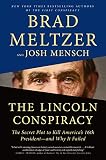
Presidential assassination conspiracy novels offer a gripping look into the darker side of American politics, tapping into our concerns about the stability of democracy. Take Condon’s “The Manchurian Candidate,” for instance; it cleverly uses Pavlovian conditioning to highlight how ideology can be manipulated. Then there’s Stone’s “JFK,” which challenges the traditional narrative put forth by the Warren Commission—it’s like a cinematic history lesson that makes you rethink everything. Meltzer’s “Lincoln Conspiracy” dives into the political schemes of the antebellum era, blending those historical elements with the thrills of modern thriller writing. And Galton’s “False and Misleading” plays with the idea of conspiracy, layering fiction over real historical events. These books don’t just entertain; they also shine a light on the underlying anxieties about how concentrated political power can threaten democratic institutions.
Congressional Cover-up Thriller
Congressional cover-up thrillers dig deep into the complex world of legislative power, where shady deals and institutional collusion turn Capitol Hill into a stronghold of secrets. Unlike Clancy’s *Hunt for Red October*, which focuses on submarine warfare, these stories dive into political intrigue that often reveals corruption through shocking judicial murders and presidential misconduct. For example, Grisham’s *The Pelican Brief* shows how Supreme Court killings get tangled in energy mogul schemes, while Baldacci’s *Absolute Power* lays bare presidential involvement in cover-up murders.


In these thrillers, you’ll follow protagonists as they navigate twisted conspiracies, battling a system rather than foreign threats. They reflect the growing distrust in institutions and tap into our genuine concerns about government accountability. The thrill comes from the high-stakes moments where everyday citizens take on powerful political machinery, risking it all to unveil the corruption lurking in the upper echelons of democracy.
CIA Operative Betrayal Story
Betrayal really hits hard when it comes from people you thought were on your side, right? That’s what makes the CIA operative betrayal story such a gripping subgenre in espionage fiction. It dives deep into how loyalty can turn into a weapon against agents themselves. Take The Bourne Identity, for example—Ludlum’s main character is an amnesiac facing the ultimate crisis when the very agency he serves becomes his enemy.
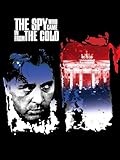
Then there’s Le Carré’s “The Spy Who Came in from the Cold,” which paints a picture of how idealism can crumble under bureaucratic red tape. If you’re looking for something more modern, Quirk’s “Dead Man Switch” offers a fresh take on these themes, while Abbott’s “Collision” shows how quickly protective organizations can shift to a predator-prey dynamic. And don’t overlook Condon’s “The Manchurian Candidate”; it’s a deep dive into the dark waters of psychological manipulation. These stories go beyond just action—they really explore what happens to your identity when the foundation of trust is shattered.

Supreme Court Justice Murder
When it comes to betrayal, intelligence agencies might feel the sting, but when that betrayal seeps into the Supreme Court, the stakes jump dramatically. Murder plots targeting Supreme Court Justices dig deep into America’s constitutional weaknesses, showcasing how a judicial assassination can initiate a systemic collapse.
| Narrative Element | Literary Function | Democratic Impact |
|---|---|---|
| Murder Investigation | Reveals hidden networks | Challenges trust in institutions |
| Judicial Corruption | Questions the integrity of the law | Erodes the rule of law |
| Political Conspiracy | Exposes power dynamics | Jeopardizes constitutional stability |
| Truth-Seeking Protagonists | Provides moral clarity | Revives belief in justice |
These stories go beyond your typical whodunit; they’re really deep dives into the state of our democracy. Authors like Grisham turn legal drama into a powerful critique of political schemes. The murder of a Supreme Court Justice highlights just how fragile democracy can be—nine justices tasked with protecting 330 million citizens. When justice falters, the whole country feels it.
Foreign Embassy Espionage Tale
When it comes to vulnerabilities in the realm of espionage, foreign embassies really take the cake. They’re like the most exposed nerve endings for the U.S. abroad, thanks to diplomatic immunity which provides a perfect cover for spies. John le Carré is a master at playing with this idea in his novels—take “The Spy Who Came in from the Cold,” for example. Embassy corridors turn into stages for betrayal, and you get a deep dive into what it’s like for agents wrapped in diplomatic cover, juggling bureaucracy while running covert operations.
The real charm of this genre is how it tackles moral ambiguity. You see characters wrestling with their integrity as they weigh personal ethics against national security. Le Carré’s “The Constant Gardener” is a prime example. It weaves together a story of pharmaceutical corruption and embassy shenanigans, showing just how institutional power can twist even humanitarian efforts. If you’re into espionage with a psychological edge, these books are definitely worth your time.
Pentagon Insider Leak Thriller
The Pentagon is the heart of America’s classified intelligence, and that makes insider leak thrillers set in its halls truly captivating. They turn whistleblowers into modern-day heroes, revealing secrets that could shake up governments. Think of authors like John le Carré, who masterfully blend moral dilemmas with issues of loyalty. These stories go beyond just showcasing information warfare—they dive into the toll of breaking ties for what’s right.
What makes this genre so gripping is its portrayal of tough choices. Characters wrestle with their loyalty to their country versus their duty to their conscience. When they bring corruption to light, they do more than reveal truths; they also put their country at risk. It’s like watching real-world whistleblower cases play out, where personal morals clash with state interests, stirring up drama in both international and local politics.