Austrian literature from the twentieth century reveals a striking pattern: over 60% of works engage with the nation’s imperial collapse and the trauma of war.
Novels set in Austria offer far more than historical backdrops. Authors like Roth, Zweig, and Jelinek transform Vienna’s coffeehouses, Alpine scenery, and aging palaces into vivid psychological landscapes. These settings function as active characters within the narrative, embodying the tension between an empire’s former grandeur and its inevitable decline.
The physical spaces themselves become expressions of deeper psychological truths, grounding abstract historical forces in concrete, sensory detail that readers can inhabit.

Key Takeaways
Here are some engaging reads set in Austria:
- *The Radetzky March* by Joseph Roth dives into the decline of the Austro-Hungarian Empire over three generations of a military family. It’s a powerful look at history through personal lenses.
- *The Piano Teacher* by Elfriede Jelinek takes you into contemporary Vienna, exploring psychological trauma and dysfunction. It’s intense and thought-provoking.
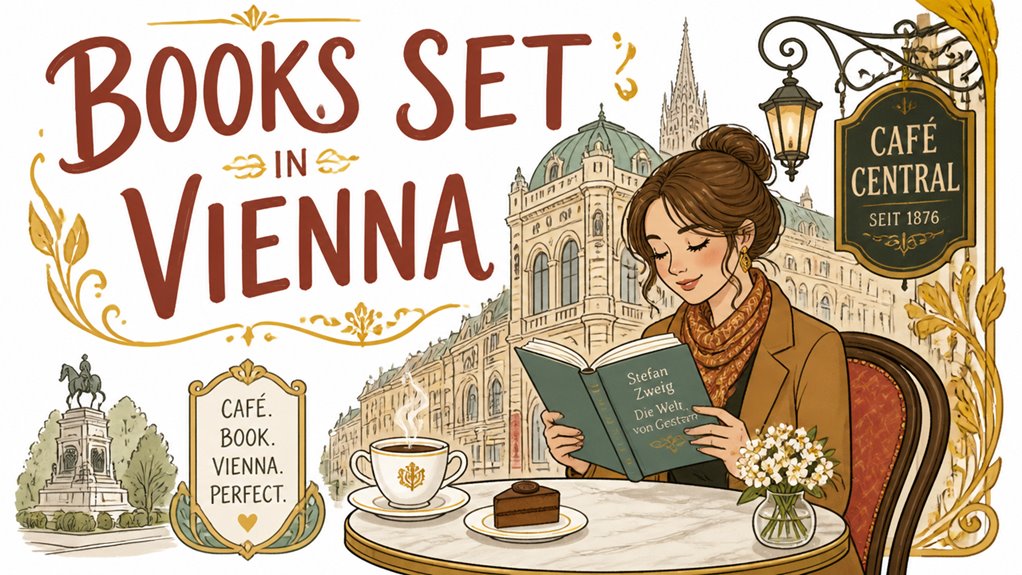
- *The World of Yesterday* by Stefan Zweig is a nostalgic tribute to pre-WWI Vienna, celebrating its cultural richness and ideals before they were shattered.
- *The Only Woman in the Room* tells Hedy Lamarr’s inspiring story of escaping Vienna for Hollywood, highlighting her remarkable contributions to science that many overlooked.
- *Night Falls on the City* paints a harrowing picture of wartime Vienna, focusing on an actress who fights to protect her Jewish husband amid increasing anti-Semitism.


These books offer a mix of history, psychology, and personal stories that beautifully capture Austria’s complexities. Enjoy your reading!
Top Austrian Literature Selections
Austrian literature is a fascinating blend of themes like empire, identity, and psychological depth—and it covers everything from Gothic horror to modernist introspection. Here are some must-read works that encapsulate this rich literary landscape:
- Imperial Decline: Joseph Roth’s *The Radetzky March* (4.10 rating, 14,315 readers) gives a gripping account of the Austro-Hungarian Empire’s downfall through a multi-generational lens.
- Psychological Darkness: Elfriede Jelinek’s *The Piano Teacher* (3.61 rating, 16,284 ratings) dives deep into trauma and dysfunction—it’s intense and unflinching.
- Gothic Foundations: J. Sheridan Le Fanu’s *Carmilla* (3.87 rating, 195,000 ratings) is crucial for understanding the roots of vampire literature, all set in Austria.

These picks showcase how Austrian authors tackle themes like power’s fragility, the complexities of identity, and the darker sides of desire—all through unique Austrian perspectives. Enjoy exploring these rich narratives!
Night Falls on the City
If you’re diving into Austrian modernism, don’t miss Sarah Gainham’s *Night Falls on the City*. This novel pulls you right into wartime Vienna, following actress Julia Homburg as she tries to protect her Jewish husband during a time of rising anti-Semitism. Gainham really nails the resilience of her characters, showing how everyday people hold onto their humanity even when everything around them is falling apart. She doesn’t just report on the impact of war; she dives deep into how political turmoil seeps into love and identity. The vivid portrayal of Vienna’s cultural scene before the war makes the darkness feel even more poignant. It’s a powerful blend of history and emotion that really sticks with you.
The Only Woman in the Room
In *The Only Woman in the Room*, Marie Benedict shines a light on Hedy Lamarr, reminding us there’s so much more to her than just that stunning face. You’ll follow Lamarr’s fascinating journey from the elegant salons of Vienna through Nazi-occupied Europe and into Hollywood’s golden age. What’s really compelling is how she used both her brains and beauty as tools for survival. Benedict takes a deep dive into Lamarr’s contributions to wartime technology, especially her frequency-hopping invention that laid the groundwork for Wi-Fi and Bluetooth. This book explores her dual legacy—the glamorous Hollywood actress and the overlooked scientist—showing how patriarchy often sidelined her achievements. It’s a captivating read about a woman who knew her beauty opened doors but always sought recognition for her brilliant mind.

The World of Yesterday
In *The World of Yesterday*, Stefan Zweig gives us a heartfelt tribute to the Vienna he cherished—a vibrant hub of intellect where coffeehouses buzzed with poets, psychoanalysts explored the depths of the mind, and artists from all over Europe flocked to create what Zweig viewed as the pinnacle of civilization. His engaging portraits of friends and sharp cultural insights capture the last vibrant days of the Austro-Hungarian Empire before everything took a dark turn. This isn’t just a memoir; it’s a critical reflection on the cosmopolitan ideals that nationalism ultimately shattered. Zweig’s nostalgia for pre-1914 Vienna isn’t just about looking back fondly—it’s a thoughtful acknowledgment of the Enlightenment values that sadly fell victim to the chaos of the twentieth century. His writing strikes a nice balance between celebrating the period’s artistic energy and examining the political cracks that led to its downfall, reminding us how quickly a sophisticated society can unravel.


The Radetzky March
Joseph Roth’s *The Radetzky March* offers a deep dive into the decline of the Austro-Hungarian Empire through the lens of the Trotta family, spanning three generations. Set against the backdrop of the Battle of Solferino in 1859 and leading up to World War I, the novel blends personal stories with historical upheaval. Roth skillfully explores themes of loyalty and identity as each generation grapples with their role in a fading world. The title pays homage to Johann Strauss’s famous march, adding a cultural layer that enriches the reading experience. With a solid 4.10 average rating from over 14,000 readers, it remains a key read for anyone interested in Viennese culture and the twilight of the Habsburgs. Roth effectively shows how family legacies can be both a source of strength and a heavy burden as they witness the collapse of their empire.
The Accidental Empress
Allison Pataki’s *The Accidental Empress* offers a fascinating look at Empress Elisabeth of Austria, transforming her from a historical icon into a relatable character. The book, published in 2015, takes you on a journey through 19th-century Vienna, where Sisi navigates the constraints of royal life. You’ll see her tackling court politics alongside Emperor Franz Joseph I, revealing the personal struggles that come with imperial responsibility. With a solid 3.94 rating from over 22,000 reviews, Pataki’s skillful storytelling dives deep into the conflict between personal freedom and royal duty. This novel beautifully captures a time of change while following one woman’s fight to maintain her sense of self amidst the opulence.
The Vienna Melody
| Narrative Element | Historical Context | Thematic Resonance |
|---|---|---|
| Alt family chronicle | Political upheaval | Passage of time |
| Musical connections | Social transformation | Cultural heritage |
| Generational bonds | Intellectual movements | Personal vs. historical |
| Viennese mentality | Artistic developments | Urban influence |
| Individual destinies | Century-long span | Legacy preservation |
The Vienna Melody offers a fascinating look at how the city’s rich cultural backdrop influences its people over the years. With a solid 3.95 rating, it smartly explores how artistic and intellectual currents help shape personal identities amidst a backdrop of change and upheaval. If you’re interested in a tale that intertwines individual stories with broader historical themes, this one’s definitely worth a read.
Recent Vienna-Focused Memoirs
Brigitte Hamann’s *Hitler’s Vienna* dives into the societal factors that shaped its historical context, while Isaac Kovach’s *The Closing Days* explores how political changes affected personal experiences. Together, these books really bring Vienna to life, showcasing it as a key player in identity formation rather than just a backdrop.